

Denmark has historically been a pioneer in energy transitions. We must be one again, by building the world’s first green electrostate – the new model of prosperity for the 21st century.
China is pursuing rapid electrification and a rapid build-out of renewable energy in order to reap the benefits of cheap energy and a higher degree of self-sufficiency, which together provide a resilient foundation in a multipolar world order.
Denmark’s opportunity lies in our head start in producing variable green energy, which places us uniquely well to develop the energy system of the future: one based on variable generation, energy storage, digitalised flexible demand, and green dispatchable power. We can be the first to demonstrate how such a system works in practice, and thereby prompt others internationally to follow.
If Denmark is to become the world’s first green electrostate, it will require a willingness to plan for rapid structural change. Realising this successfully will require investment through improved electrofinance and fiscal policy, as well as a more wholehearted approach to green industrial policy.
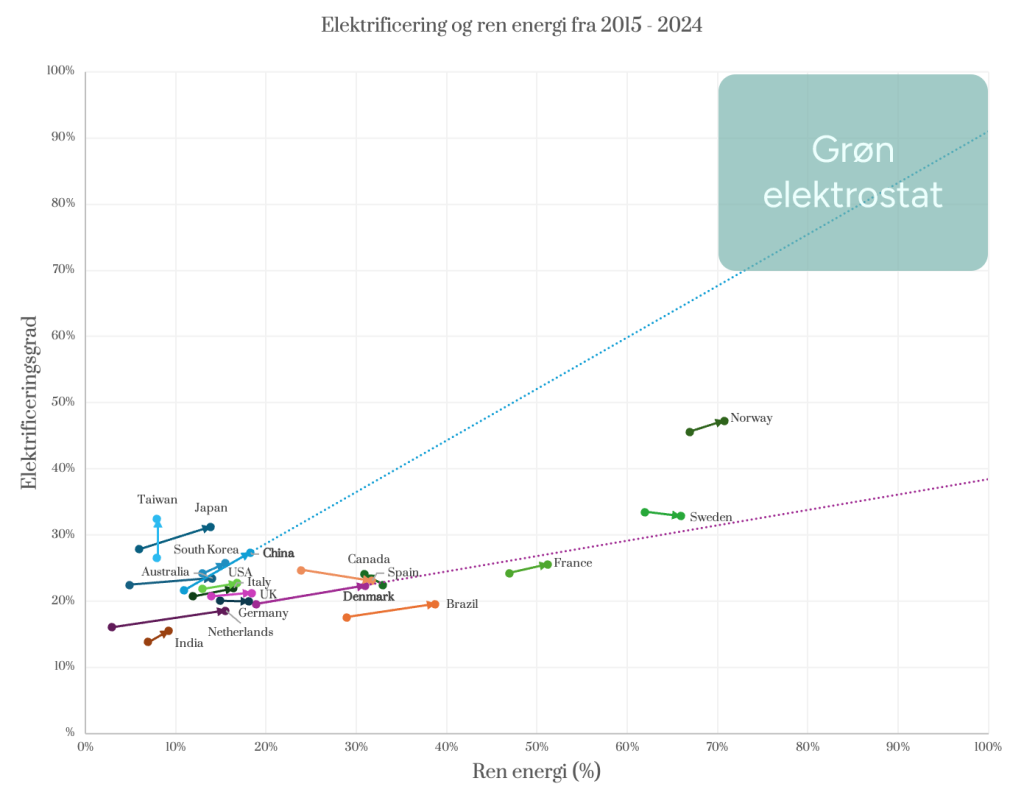
Denmark can build the energy system of the future through rapid electrification and renewable expansion. It would serve both as a model of prosperity and as an insurance policy for a multipolar world order.
The road to the energy system of the future is filled with uncertainty and coordination problems, because it requires simultaneous structural change in how we produce, transport and consume energy. The state can reduce these difficulties by establishing a single vision, by planning, and by investing.
Denmark can once again become an international role model by combining an ever-higher share of green energy with rapid electrification. There will be no global carbon price, so one of the most important things a small country can do is to show the way to a green, electrified and prosperous society. The threat to Denmark from climate change creates an urgent need to promote this trend in developing countries.